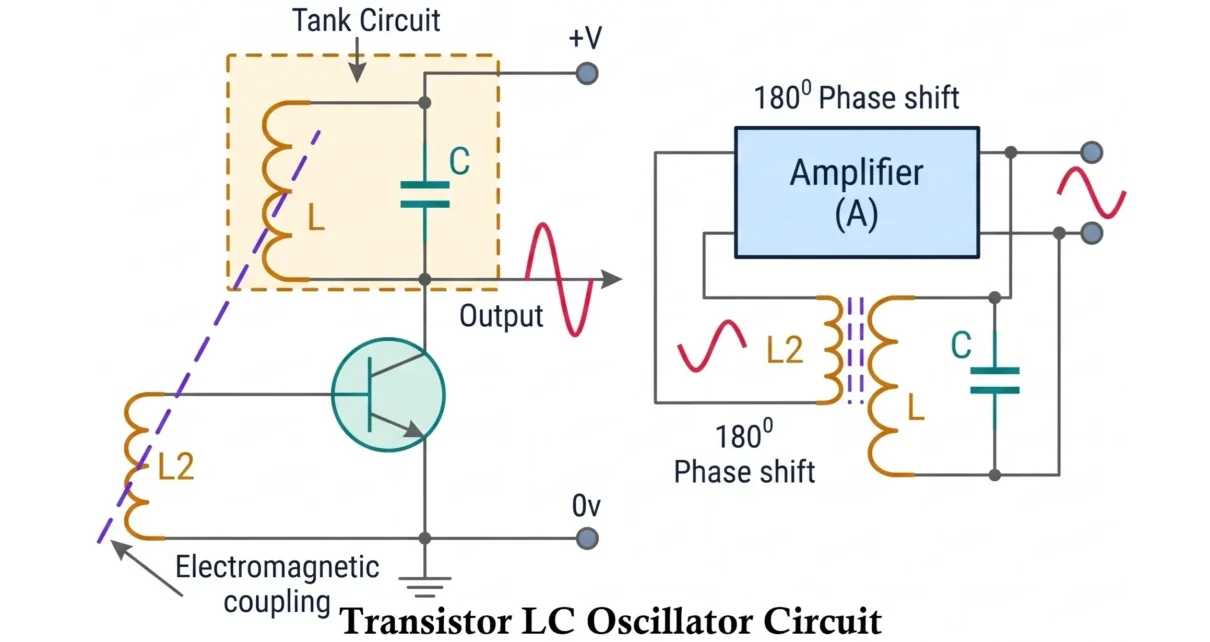
An LC oscillator is an electronic oscillator circuit that uses an inductor (L) and a capacitor (C) to generate continuous sinusoidal oscillations. These two components form a frequency-selective network known as an LC tank circuit, tuned circuit or resonant circuit. The tank circuit determines the oscillation frequency through the energy exchange between its electric and […]
Capacitors
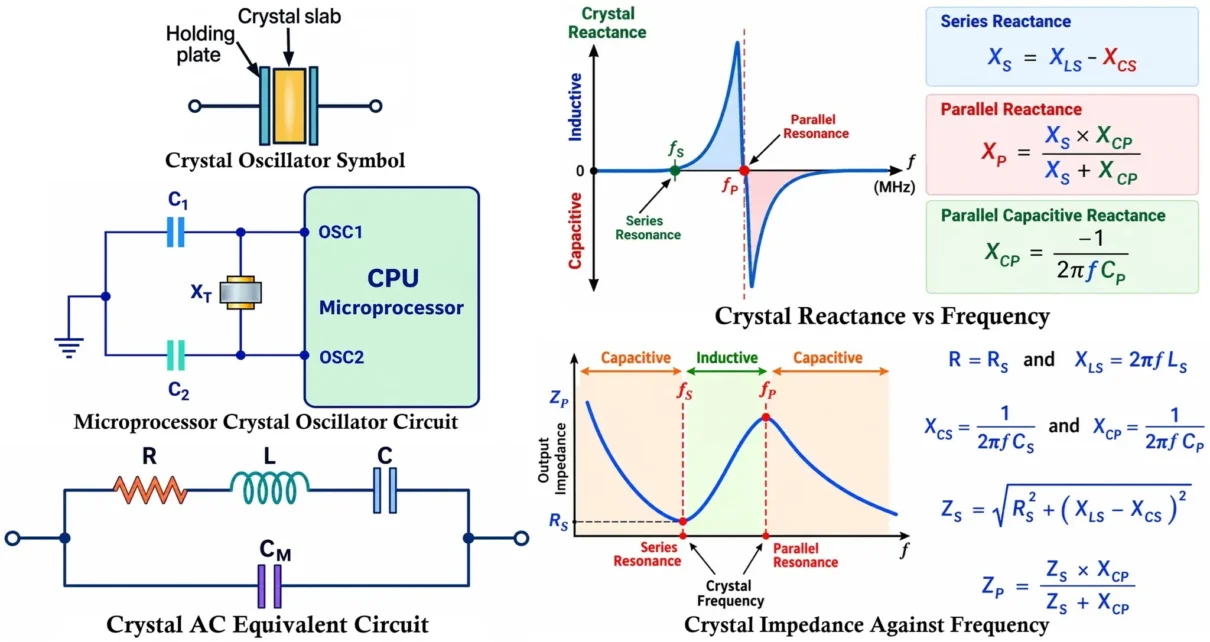
Crystal Oscillator: Circuit Diagram, Working Principle, Types, and Applications
A crystal oscillator is an electronic circuit that uses the mechanical resonance of a piezoelectric crystal, usually quartz, to generate a stable periodic electrical signal. It is widely used in microcontrollers, microprocessors, digital clocks, communication systems, frequency counters, and electronic instruments that require accurate timing. Compared with conventional RC and LC oscillators, a crystal oscillator […]
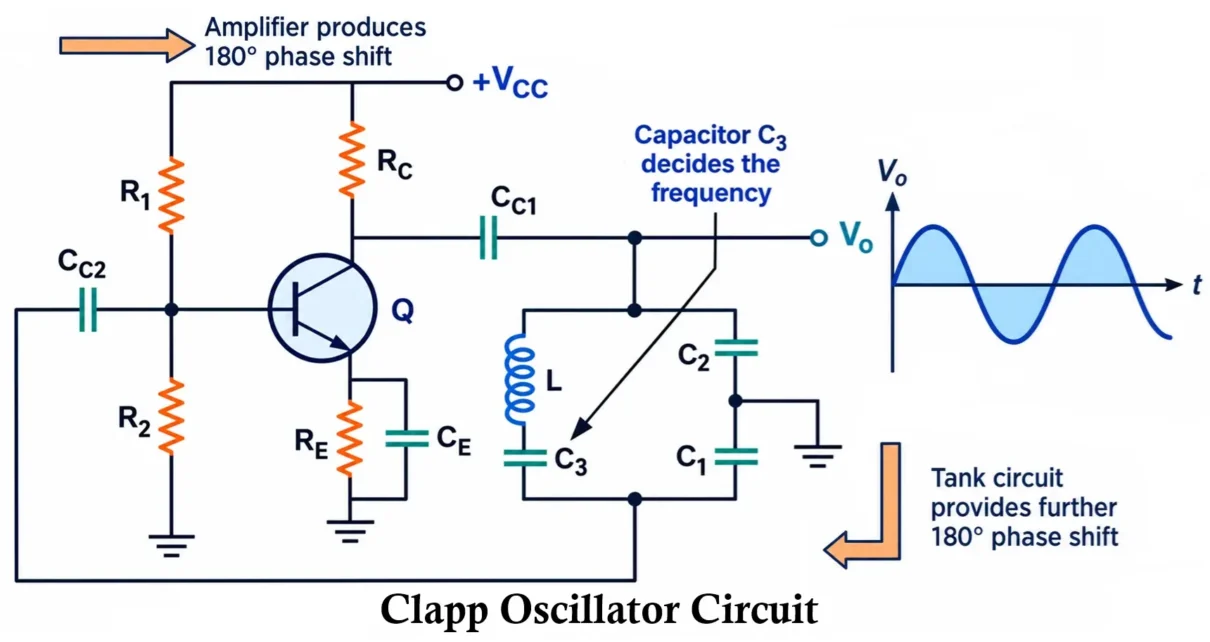
Clapp Oscillator Circuit Diagram, Working and Applications
The Clapp oscillator is an LC electronic oscillator used to generate sinusoidal signals with good frequency stability. It is a modified version of the Colpitts oscillator, designed to reduce the influence of transistor junction capacitances and stray capacitances on the oscillation frequency. The main difference between a Clapp oscillator and a Colpitts oscillator is the […]
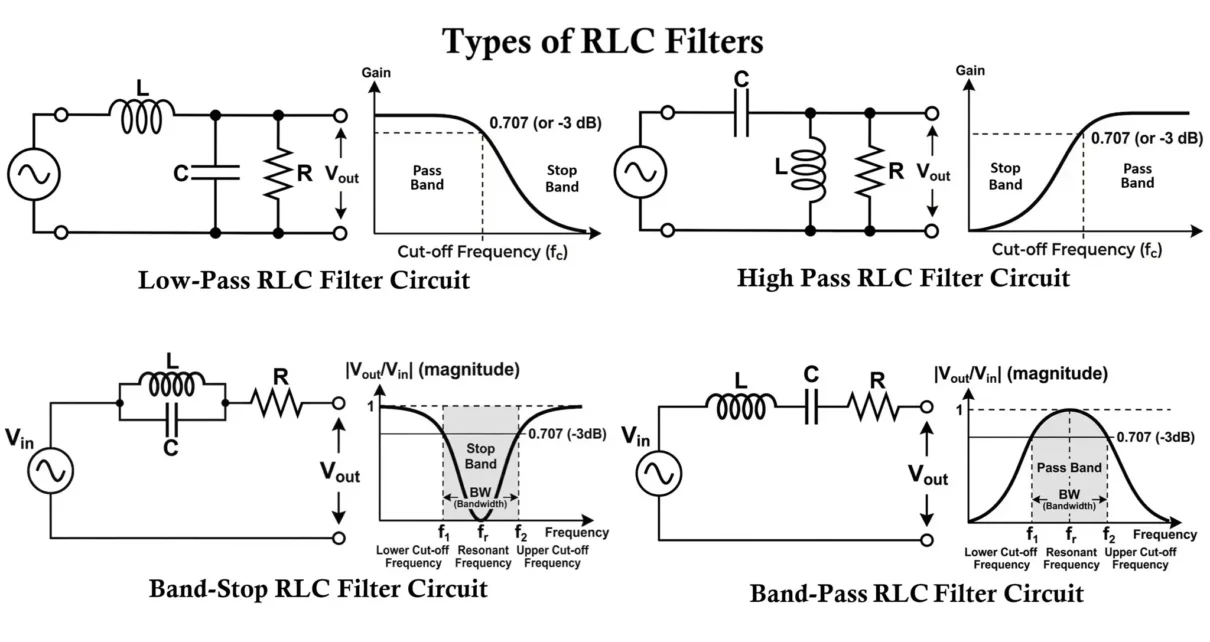
RLC Filters: Circuit Diagram, Working, Types, and Applications
RLC filters are advanced frequency-selective circuits in electronics that utilize a resistor (R), inductor (L), and capacitor (C) to control the passage of different frequency components. By incorporating resistance along with inductance and capacitance, RLC filters provide more precise control over bandwidth, damping, and resonance characteristics compared to LC filters. Unlike LC filters, which ideally […]
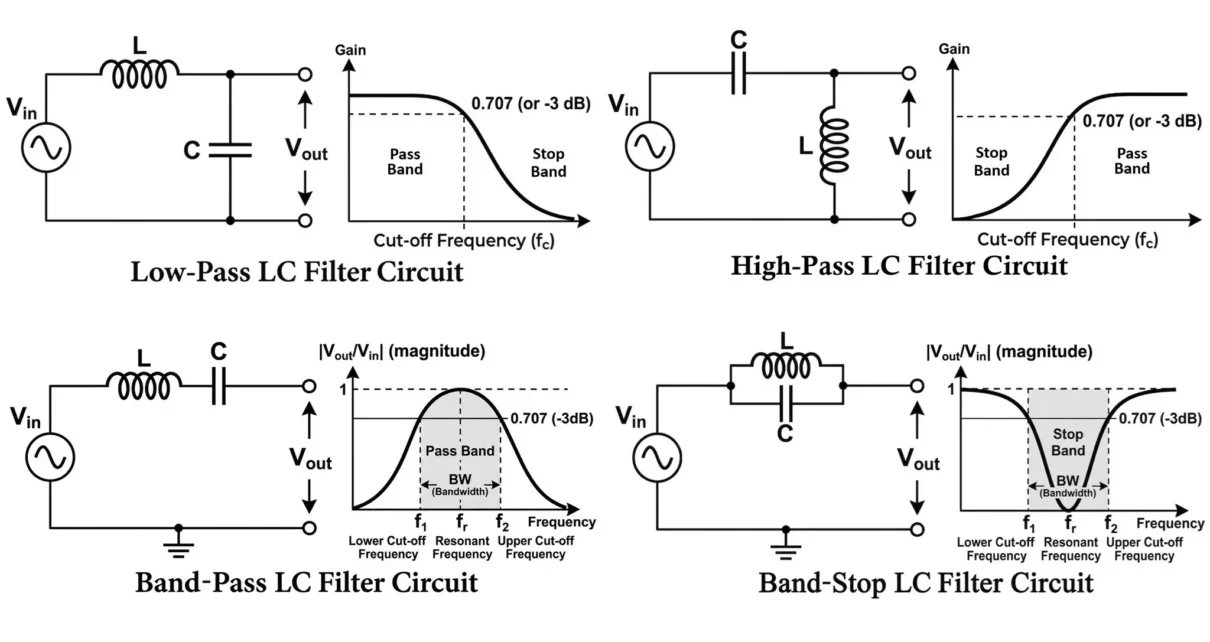
LC Filters: Circuit Diagram, Working, Types, and Applications
LC filters are widely used frequency-selective circuits in electronics that utilize an inductor (L) and a capacitor (C) to allow certain frequency components to pass while blocking others. Unlike RC filters, LC filters rely on the interaction between inductive reactance and capacitive reactance, making them highly effective in radio frequency (RF), power electronics, and communication […]
Inductive Reactance and Capacitive Reactance Explained
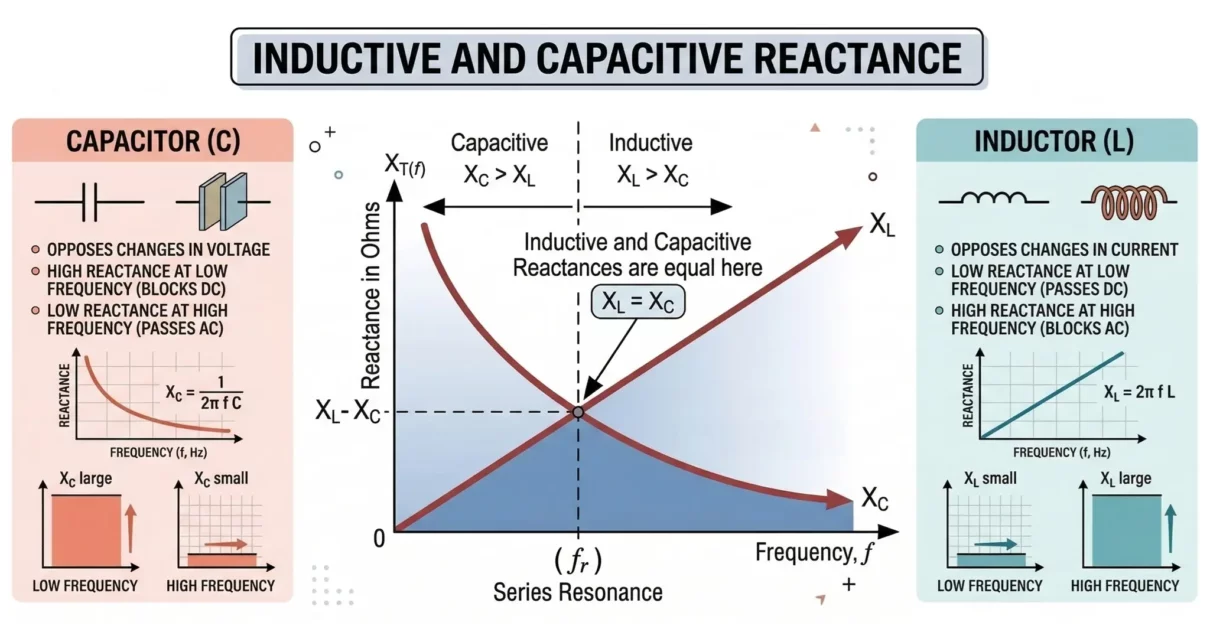
Understanding inductive reactance (XL) and capacitive reactance (XC) is essential for analyzing AC circuits, designing filters, oscillators, power electronics systems, and communication circuits. This article explains all fundamental concepts including resistance, reactance, impedance, frequency response, graphs, ideal and real component behavior, solved examples, advantages, disadvantages, and applications. In electronic circuits, especially those operating with alternating […]